

A voluminous new book on military history, dedicated to the Spanish Austrophile army in the War of Spanish Succession, has recently come into my hands. Authored by Giancarlo Boeri and Francesc X. Hernàndez, this extraordinary 479-page work is lavishly illustrated with hundreds of full-color drawings and diagrams by the celebrated artist Francesc Riart. Althopugh published in Catalan language only, for the moment, under the title of "Els exèrcits de Carles III i Elisabet de Brunsvic" (="The armies of Charles III (*) and Elisabeth of Brunswick"), this one book is an essential addition to the library of anyone passionate about this conflict, which shaped the turbulent makeup of contemporary Spain.

The collaboration of these two undisputed experts, Boeri and Hernàndez, has shed new light on the military uniforms and vexillology information on the units serving the Habsburg cause —to such an extent, and of such quality, that has made me feel compelled to revise each and every one of my WSS painting guides, and possibly even this or that one of my published WSS flag sets in every scale (1/144th, 1/100th, 1/72nd and 1/56th, currently).
This is a job I'm going to do without any special hurry, logically, although I will try to keep it at a steady enough pace. Eventual news will be duely shared in this blog as they come.

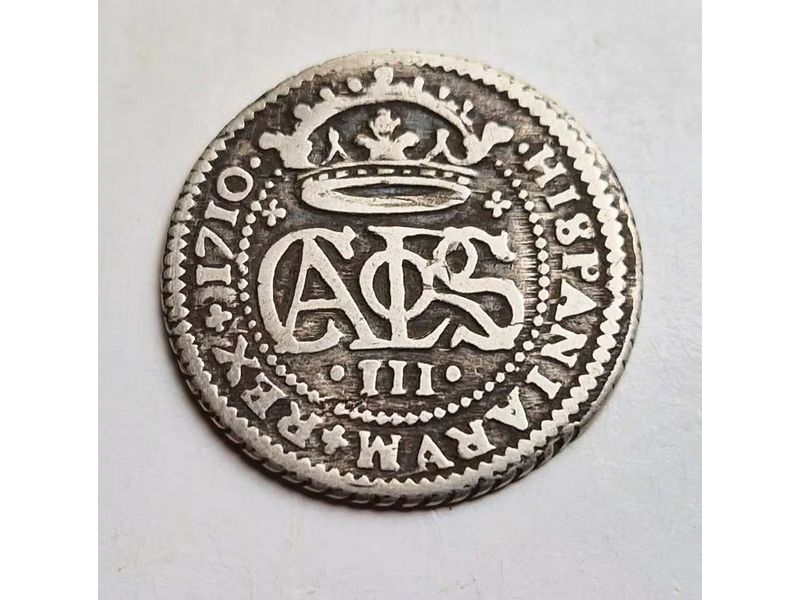
(*) Current Spanish Historiography does not recognize as legitimate the "III" regal numeral of Charles Habsburg as king of Spain, referring to him instead as just "Archduke Charles" or "Pretender Charles", while assigning that numeral to Charles Bourbon & Farnesio (1759-1788). However, while it might be true that Charles' hurriedly pressed coronation in Madrid —during the ephemerously triumphant 1710 Allied counter-offensive— lacked most of the elements contributing to normality and legitimacy, nevertheless it can't be overruled that Spain wasn't a unified kingdom yet at that time, so his previous coronation as king in the Catalan-Aragonese States in 1706 was, unlike that one of Madrid, fully legitimate and following all the prescribed steps before the "Corts" or Parliaments of Aragon, Catalonia, and Valencia. Besides, his effective rule from that point in Catalonia and Balearic Islands was long enough (8 and 9 years, respectively) not to be ignored as if it didn't exist. Therefore, maybe he can never be truly acknowledged as 'Charles III of Spain', he was legitimately 'Charles III of Aragon' indeed. This is why of the book's name, transpiring a philosophy I do adhere to.

No comments:
Post a Comment